You Learn From What You See


Do you read the limit line on the ground or the elongated letters before it?
OR

Do you read the bright red lights of the car in front of you?
Does it really matter what you read so long as you stop?
Reading is more than just words on a page. Reading is deriving meaning from someone's attempt to communicate an idea to you or others. This logic can be applied to learning concepts as well.
Everyone learns in their own way. Some people can read words and derive meaning with ease. Others need to see what they are learning and visualize how it works. Still others may even need to practice it with their hands and feel what a concept is before they fully understand it. Even some others have to create something using those concepts to fully understand how it all works together.

What can a teacher do to meet all of these different learning styles?!


This week, we have had a lot of fun in class drawing our understanding of concepts on the white board. Students demonstrated how they see gender roles in the past and present by drawing walls, ceilings, stick figures, shapes, colors, animals, and more! Students even made changes and alterations to each other's visuals in front of the class to show how they visualize their own understanding. By allowing students to show the class how they have been "seeing" their learning, class discussions have grown more elaborate. Rather than choosing visuals, students choose their own visuals.

It can sometimes be difficult to explain something in a new way or find a connection that makes sense to someone from a different generation or culture. By letting students show their own connections to concepts in front of the class through visual representations, explaining their understanding visually, manipulating each other's drawings with their hands and minds, and evaluate each other's visuals, students can learn from each other as well as their teacher.
It can sometimes be difficult to find a new way of thinking about something you understand deeply. By letting young minds who are fresh to a concept be a resource to you, you can make things easier on yourself as a teacher and struggling students who need those fresh new views. It will also validate that students are making important, relevant, and helpful connections to concepts that makes learning easier and more rewarding.
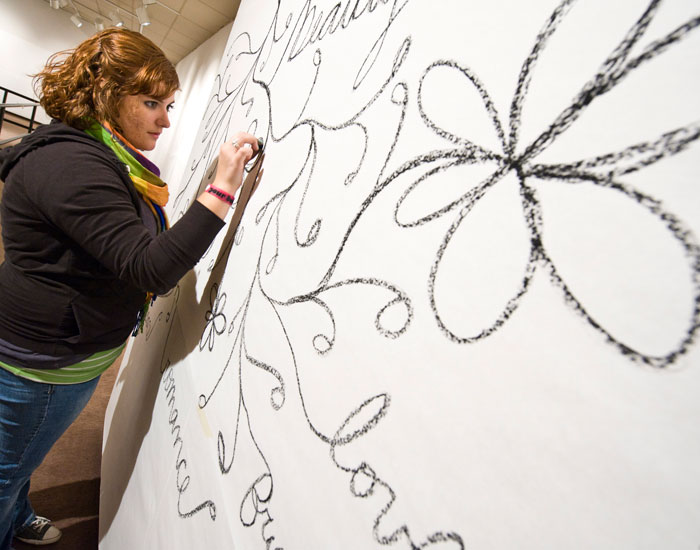
Now go out there and let those visual learners make their own connections!
Everyone learns in their own way. Some people can read words and derive meaning with ease. Others need to see what they are learning and visualize how it works. Still others may even need to practice it with their hands and feel what a concept is before they fully understand it. Even some others have to create something using those concepts to fully understand how it all works together.
What can a teacher do to meet all of these different learning styles?!
Draw a picture!
It can sometimes be difficult to explain something in a new way or find a connection that makes sense to someone from a different generation or culture. By letting students show their own connections to concepts in front of the class through visual representations, explaining their understanding visually, manipulating each other's drawings with their hands and minds, and evaluate each other's visuals, students can learn from each other as well as their teacher.
It can sometimes be difficult to find a new way of thinking about something you understand deeply. By letting young minds who are fresh to a concept be a resource to you, you can make things easier on yourself as a teacher and struggling students who need those fresh new views. It will also validate that students are making important, relevant, and helpful connections to concepts that makes learning easier and more rewarding.
Now go out there and let those visual learners make their own connections!
